Introduction
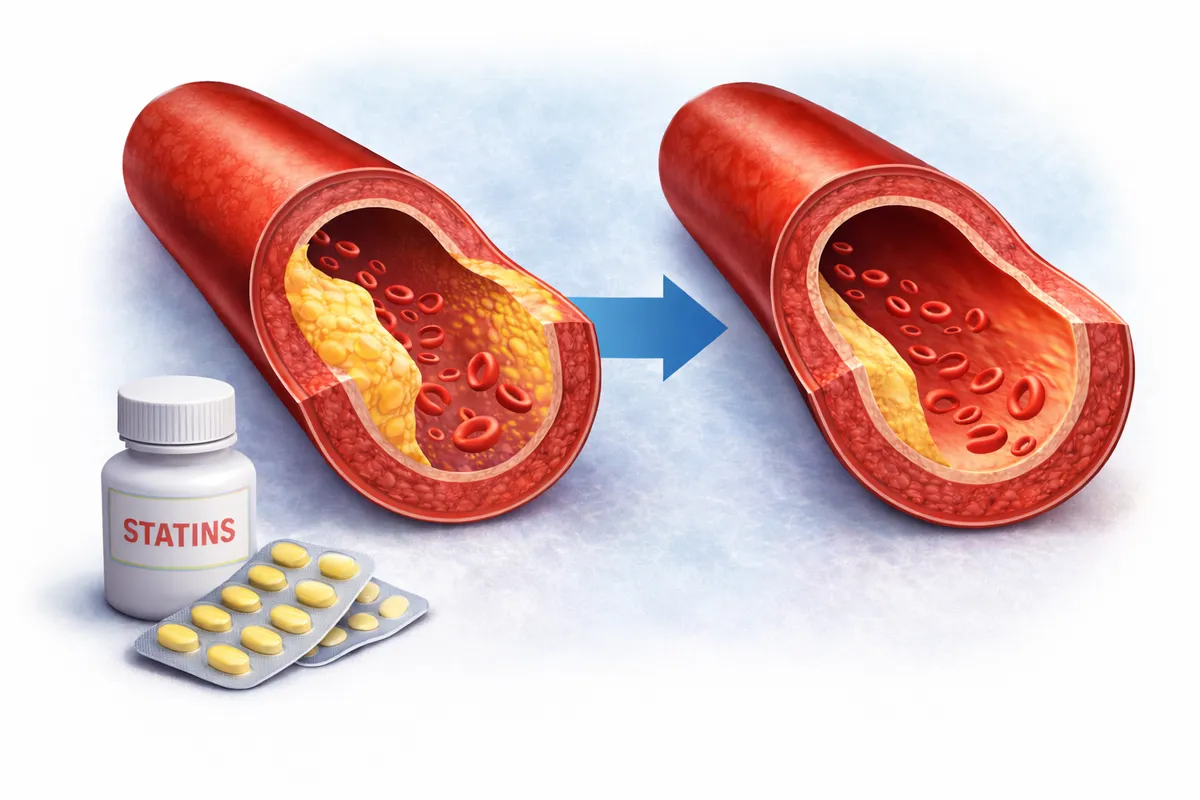
One of the most common questions patients ask when starting statin therapy is whether their existing coronary plaque will actually shrink. The answer is nuanced, and depends on a number of individual factors.
Efficacy of Statins in Plaque Regression
Statins have been shown to induce coronary plaque regression in many patients, but the degree of benefit varies. The 2022 JACC state-of-the-art review summarises the evidence [5]. Key findings include:
- Baseline cholesterol levels matter: Statin therapy appears to be more effective at inducing plaque regression in patients with moderate to high baseline cholesterol levels, compared to those who start with low cholesterol [1].
- Dose-dependent effect: A large body of evidence confirms that statins induce plaque regression in a dose-dependent manner, proportional to reductions in LDL cholesterol [6, 7, 8].
- Plaque composition changes: With statin therapy, fibrous and calcified plaque volumes tend to increase, while noncalcified fibrofatty and necrotic core volumes decrease. This represents a stabilisation and favourable remodelling of plaque, even when total volume reduction is modest [2, 9, 10].
Factors Affecting Plaque Regression
Several factors influence the likelihood and extent of plaque regression:
- Baseline plaque characteristics: Patients with a large plaque burden, thin-cap fibroatheroma, low-attenuation plaque, and positive vessel remodelling are at higher risk for plaque progression and may benefit most from aggressive treatment [11, 12].
- Duration of treatment: The effects of statins on plaque regression are typically observed over time, with trials measuring change after 8 to 24 months of continuous therapy [1, 7, 13].
- Combination with other therapies: Adding ezetimibe or PCSK9 inhibitors to statin therapy may enhance plaque regression beyond what statins achieve alone [13, 14].
Quantifying the Benefit
While the exact percentage of patients experiencing plaque regression varies between studies, some important benchmarks exist:
- A meta-analysis found that a 1% decrease in percent atheroma volume (PAV) was associated with a 19% reduction in the odds of a major adverse cardiovascular event (MACE) [4].
- Even in cases where overall plaque volume does not decrease significantly, statins provide cardiovascular benefit by stabilising existing plaques and reducing the risk of rupture, which is ultimately the event that causes heart attacks.
Summary
Not all patients on statin therapy will experience measurable plaque regression. Effectiveness varies based on individual factors, adherence to therapy, and the specific statin and dosage used. However, even without regression, statins remain one of the most powerful tools available to reduce cardiovascular risk. If you have questions about your specific treatment, please do not hesitate to get in touch.
According to Dr Matthew Balerdi, Consultant Cardiologist, the primary benefit of statins is plaque stabilisation, making existing plaques less likely to rupture and cause a heart attack.
Frequently Asked Questions
Can statins reverse plaque buildup? High-intensity statins can stabilise and modestly reduce coronary plaque over time. The primary benefit is plaque stabilisation, making existing plaques less likely to rupture and cause a heart attack.
How long does it take for statins to work? Cholesterol levels typically fall within 2-4 weeks. Cardiovascular risk reduction begins within months, though maximum benefit accrues over years of consistent treatment.
Will my calcium score go down on statins? Paradoxically, CT calcium scores may increase on statins because calcification of plaque is actually a sign of healing and stabilisation. A rising calcium score on statins does not mean worsening disease [10].
References
- Wakabayashi K, et al. Efficacy of statin therapy in inducing coronary plaque regression in patients with low baseline cholesterol levels. J Atheroscler Thromb 2016;23(9):1055-1066
- van Rosendael AR, et al. Association of statin treatment with progression of coronary atherosclerotic plaque composition. JAMA Cardiol 2021;6(11):1257-1266
- American College of Cardiology. Coronary atherosclerotic plaque regression: ten points to remember, January 2022
- Iatan I, Guan M, Humphries KH, Yeoh E, Mancini GBJ. Atherosclerotic coronary plaque regression and risk of adverse cardiovascular events: a systematic review and updated meta-regression analysis. JAMA Cardiol 2023;8(10):937-945
- Dawson LP, et al. Coronary atherosclerotic plaque regression: JACC state-of-the-art review. J Am Coll Cardiol 2022;79(1):66-82
- Nicholls SJ, et al. Statins, high-density lipoprotein cholesterol, and regression of coronary atherosclerosis. JAMA 2007;297(5):499-508
- Nissen SE, et al. Effect of very high-intensity statin therapy on regression of coronary atherosclerosis: the ASTEROID trial. JAMA 2006;295(13):1556-1565
- Nicholls SJ, et al. Effect of two intensive statin regimens on progression of coronary disease: the SATURN trial. N Engl J Med 2011;365:2078-2087
- Lee SE, et al. Effects of statins on coronary atherosclerotic plaques: the PARADIGM study. JACC Cardiovasc Imaging 2018;11(10):1475-1484
- Puri R, et al. Impact of statins on serial coronary calcification during atheroma progression and regression. J Am Coll Cardiol 2015;65(13):1273-1282
- Motoyama S, et al. Plaque characterization by coronary computed tomography angiography and the likelihood of acute coronary events in mid-term follow-up. J Am Coll Cardiol 2015;66(4):337-346
- van Rosendael S, et al. Clinical and coronary plaque predictors of atherosclerotic nonresponse to statin therapy. JACC Cardiovasc Imaging 2023;16(4):495-504
- Tsujita K, et al. Impact of dual lipid-lowering strategy with ezetimibe and atorvastatin on coronary plaque regression: the PRECISE-IVUS trial. J Am Coll Cardiol 2015;66(5):495-507
- Nicholls SJ, et al. Effect of evolocumab on progression of coronary disease in statin-treated patients: the GLAGOV randomized clinical trial. JAMA 2016;316(22):2373-2384
Related tests and services
Have Questions About Your Heart Health?
Book a consultation with Dr Matthew Balerdi for expert cardiac assessment.