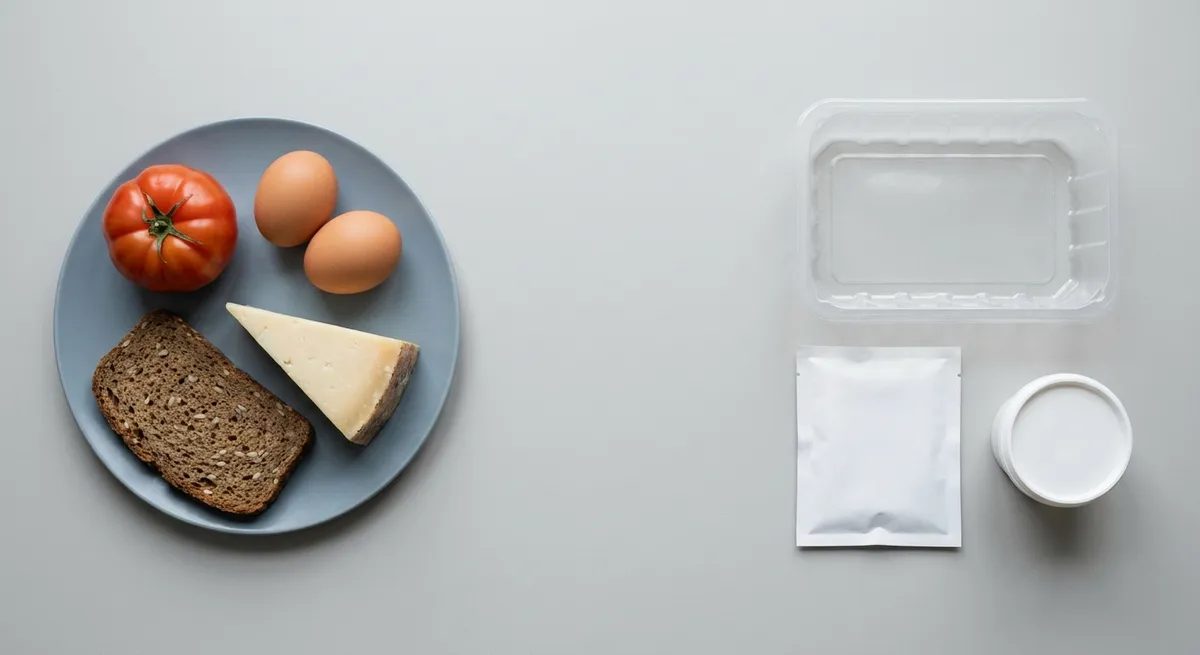
My Journey Away from Ultra-Processed Foods
For the last 10 months I have removed seed oils from my diet (mostly). Many people won't have heard of this, and if they have, believe it's a social media fad or worse, misinformation. This is the story of how I discovered what was really in my food – and why it changed everything.
The Plateau That Changed Everything
In 2022 I decided to prioritise health and family. The start of this journey is covered in my other article about exercise and fasting, but my weight loss plateaued at the end of 2023. I was exercising regularly, fasting intermittently, and eating what I thought was a healthy diet. But something wasn't working.
I felt stuck. Despite all my efforts, the scales weren't budging, and I couldn't understand why. I'd done everything "right" – or so I thought.
The Book That Opened My Eyes
I was gifted Dr Chris Van Tulleken's Ultra-Processed People by my father. It was a rude awakening to what I was putting into my body and almost caused a panic attack in the supermarket when I understood "there was no food here".
Reading that book felt like having a veil lifted. Dr Van Tulleken explained how ultra-processed foods are engineered to be irresistible, how they're designed to override our natural satiety signals, and how they've quietly become the dominant part of most people's diets – including mine.
My wife went on a similar journey, reading Dr Mindy Pelz's Fast Like a Girl and Davinia Taylor's This is Not a Diet. We were both learning the same uncomfortable truth from different angles: we weren't eating real food nearly as much as we thought we were.
The Supermarket Revelation
The real shock came during my next grocery shop. Armed with my new knowledge, I started reading ingredient labels properly for the first time. What I discovered horrified me.
My diet previously would have been described as good, but by definition, was around 30% ultra-processed food, without realising it. I thought I was making healthy choices – wholegrain bread, low-fat spreads, "natural" cereals, convenient ready meals on busy nights. But nearly a third of what I was eating was heavily processed, filled with ingredients I couldn't pronounce and didn't understand.
Standing in that supermarket aisle, looking at products I'd bought for years, I had a moment of genuine panic. If this "healthy" bread was ultra-processed, and these "natural" crackers were full of seed oils and emulsifiers, and even this seemingly innocent tomato sauce had a dozen ingredients I'd never heard of – what could I eat?
Making Real Changes Together
My wife and I decided to tackle this together. We knew that trying to eliminate all ultra-processed food overnight would be impossible and unsustainable. Instead, we focused on education and gradual change.
Together, we managed to bring this number to between 5-10% on average by best guess. It wasn't easy, and it didn't happen quickly. We had to relearn how to shop, how to read labels, and how to cook from scratch more often.
Here's what worked for us:
- Start with awareness: We spent the first few weeks just identifying what was ultra-processed in our regular shopping, without trying to change everything at once.
- Focus on whole foods: We prioritised shopping the perimeter of the supermarket – fresh produce, meat, fish, eggs, dairy. The middle aisles became less important.
- Learn to read labels: If we couldn't pronounce an ingredient or didn't know what it was, we questioned whether we needed that product.
- Cook more at home: This was perhaps the biggest change. Cooking from scratch meant we controlled exactly what went into our food.
- Be realistic: We acknowledged that some ultra-processed food would remain in our diet, and that was okay. Perfection wasn't the goal – significant improvement was.
The Results
The changes didn't happen overnight, but they did happen. Within a few months, I noticed:
- My weight loss plateau broke
- I felt more energetic throughout the day
- My digestion improved significantly
- I felt more satisfied after meals and snacked less
- My taste preferences changed – real food tasted better, and processed food started tasting artificial
Most importantly, I felt like I'd taken back control of what I was eating. I was no longer a passive consumer of whatever the food industry wanted to sell me.
Why I'm Sharing This
I'm writing this because I believe most people have no idea how much ultra-processed food they're eating. I certainly didn't. And it is not your fault.
The food industry has spent decades perfecting these products, marketing them as healthy, convenient, and normal. They've made it incredibly difficult to avoid ultra-processed foods, and they've done everything possible to keep the truth about their products hidden or confusing.
My journey away from ultra-processed foods isn't about being perfect or following a rigid diet. It's about being informed, making conscious choices, and understanding what I'm really eating. If my story helps even one person look at their food differently, it will have been worth sharing.
In my other articles, I'll dive deeper into the science behind ultra-processed foods, explain what seed oils really are and why they matter, and break down the confusing world of fats and nutrition. But this is where it all started – with a book, a supermarket, and a moment of clarity that changed how I eat forever.
Related tests and services
Have Questions About Your Heart Health?
Book a consultation with Dr Matthew Balerdi for expert cardiac assessment.